Today, we ate a traditional English breakfast at Acorn Guest
House. Then we proceeded to the Castle for today’s lesson. Firstly, we
discussed on the books we read and how we read them. Various answers by us were
textbooks, fiction books, newspapers and online articles. I also learnt that we
read for information, learning, imagination and communication. Then we
discussed the differences between reading books and reading on the screen. For
reading, various learning that we provided were that it was leisurely,
addictive, absorbing, thought provoking and enjoyable. For reading on a screen,
various answers such as entertaining, informative, convenient were provided.
From this activity, I was able to really distinguish the differences between
reading books and reading on a screen.
Visualising the past
We also learnt to understand the differences between reading
and scanning too. Reading is when we digest information while scanning is when we skim through it as though we
are looking for something. Then we did another activity where we closed our
eyes and tried to remember past enjoyable memories of reading. I wrote of the
time when I I was 7 years old when my mother read to me about Queen Elizabeth I
during my first visit to the library. I also remembered that the main reason I
asked my mother to read to me that book was due to its wonderful illustrations.
After this activity, we did a timeline from the first time
someone read to us till our reading habits in the present. We also discussed a
little about the fact that of people living in the past were called “People of
the Book” but now we were called “People of the Screen”. “People of the Book”
rely mostly on books, magazines or newspaper but “People of the Screen” rely
mostly on computers, laptops, Ipads or their phones to access the Internet in
order to read newspapers, books or magazines.
We also watched a video called “Is a magazine a broken
iPad?”.
The video was about a one-year-old toddler who was more successful in
using an iPad than a magazine. Then, we gave the girl a name (Virgil) before
comparing how much things might change in 15 years’ time and the present. So,
we were supposed to imagine that it is 2027 and the girl is a teenager. Thus,
we were supposed to tell her how we used to read books during our time but now
during her time, everyone is using their iPads or laptops.
After this activity was over the class was split up into two
groups. We were supposed to debate about the advantages of reading through a
screen against the advantages of reading on a book. Our group was a pre-screen
and so we were supposed to support reading through a screen. So, we discussed
all the advantages of reading though a screen and disadvantages of reading on a
book.
Lunch at Tesco
After that we took a 15-minute walk to the Tesco superstore
and we ate our lunch at the café there and also did some shopping at the same
time.
After lunch, we had our debate. It was quite interactive and
engaging. Most of us were able to voice out our opinions about the reasons why
reading books or reading on a screen is better. After a long, tiring and really
entertaining debate, our group managed to convince Mr John that reading on a
screen is better. I really enjoyed the debate very much.
Then, Mr John told us to do a paragraph of a narrative essay
and expository essay each about a blind or deaf man. I really think that this
essay was very useful as it teaches us how to describe objects better and also
to be more flexible in the way we think so that it would be easier for us to
put ourselves in the shoes of a blind or deaf man and feel how they feel about
their condition. Each time we finished an activity Mr John would ask us to read
our work aloud. Overall, he told us he was quite impressed with our work and
the amount of effort we put in it.
VS VP, Mr Chow, with a Reach Cambridge Inspector
After the debate, Mr John gave out an article about the third annual Bulwer-Lytton Contest which was held in 1984. The aim of the contest was to see who is able to write the worst possible opening sentence for a novel. After reading the article, we were supposed to write our very own bad opening sentences for 5 genre: Crime, Horror, Romance, Adventure and Fantasy. In my opinion, it is quite difficult to write a bad opening sentence as we would need to know all the things that make it sound bad in the first place such as the anticlimax,wordiness, parody and a few other aspects.
Relaxing outside The Castle
Lastly we are supposed to write an essay on our journey from
Singapore to Cambridge. However, due to a lack of time, we were not able to
finish it. Mr John also gave out the synopsis of “The Taming of the Shrew” so
that we could read it before watching the movie “Ten things I hate about you”.
Then, we ate a traditional English dinner of Fish and Chips
at the Castle and it was delicious and mouth-watering. Then, we watched “Ten things I hate
about you” which is a modern retelling of “The Taming of the Shrew”. The show
was really meaningful, romantic and humourous at the same time. It was a really
wonderful movie and we also ate some snacks such a popcorn and biscuits. I
really enjoyed the movie very much. On the whole, I
really enjoyed today’s lesson a lot as it was very interactive and exciting due
to Mr John’s vigour and wonderful teaching style.
- Alvinn Philips (VS)
Reflections of Day 3 by Jaslyn, Cristalle, Elizabeth (CGS)
Yesterday we learnt about the different elements that make
up a good essay which includes style, structure, focus and answering questions.
Mr John emphasized structure and ‘hitting the point’ when writing essays. For
example, he thought us how to use the road-map method to plan our essay well.
This method is useful for our planning of essays because it allows us to think
about each point in depth and to make sure it does not go out of point.
Personally, we felt that he could have elaborated more on the method as it is a
useful tool for our essay writing. After that, we had an activity on the
condensation of texts which can help us in making our essays more concise and
to the point. We enjoyed this activity because we were able to clearly see the
importance of using simple key words to make our pint easily understood. At the
end of the lesson, we were instructed to write a summary of what we have
learnt, which helped us reinforce what we have learnt. On the whole, we find
that this lesson was effective because we could understand his teaching.
Today we started off with thinking about our reading habits
– how wand why we read the way we read. There was a short activity when Mr John
got all of us to close our eyes and recall what we had read when we were younger.
After that, he got us to draw a time-line of our reading experiences. This
helped us realise how our reading habits have evolved over the years. For
example, when we were younger we would only read picture books, however as we
have grown older, we have progressed to reading more complex texts which
require more in-depth thinking and have turned to even using technology. For
example, sometimes, we use our phones or computers to read e-books instead of
paperbacks. This has also affected the content we read. Reading using our
phones or the computer enables us to access texts with a greater diversity of
content. However, it also means that we pay less attention to the minor details
of a story or article. Personally, we found this activity very enlightening for
us as we became more aware of how our reading habits have changed as we mature.
After that, we compared reading on a screen to reading on print, and we
realised how different they are. Reading books is more of a personal activity/ experience.
We do it at a more leisurely pace and enjoy the process. Reading books opens up
a whole new world and we are able to empathise with the characters in the
story.
On the other hand reading on screen is more interactive and
informative, for usually when we read on screen, we are often searching for
something specific to complete an assignment for example. However, when we read
on screen, we are not always focussed, and we get distracted easily. After
lunch, we had a debate on the different mediums – whether books or computers are
better. It was rather exciting and
ironic because the team supporting books in fact used computer screens to
present their argument. We ended off concluding that what matters most is the
content, not the medium, so long as the authors continue writing stories that
are good, the method of presentation does not matter much.
For the next half of the lesson, we focused on creative
writing. We had a friendly competition on bad introduction for novels which
benefitted us a lot, as we were able to understand what makes a good
introduction and what does not. Next we were told to write an exposition and a
narrative about how it would be like if we lost either our sight or hearing. This
forced us to write while being more reliant on and explore our other senses,
allowing us to greatly improve our descriptive writing skills. As readers, we
read books that interest us, so we should know what it takes to catch the
attention of a reader. Hence, through the exercise we also learnt to picture
ourselves as the readers of our essays so as to make the content more
interesting.
To sum up what we have learnt, reading and writing are an
important part of our everyday life. This course really made us see the
importance of such skills because being a good writer does not make you a good
reader neither does being a good reader, a good writer. In order to be good in
both reading and writing, we realised we should read deeply and not simply scan
through the texts we read, so while doing so, we will gradually be influenced by
other writer’s styles and ideas which will in turn improve our writing skills.
We found Mr John’s teaching style more engaging compared to our school teachers
and that’s probably the reason why we were able to absorb most things that he
taught us. However, we feel that he could have spoken more slowly so that we
can process the information more easily.
- Jaslyn, Cristalle, Elizabeth (CGS)
Reading in the 21st Century: an overview of the technological innovations of contemporary society and how they change the process of reading and writing
The lesson was on how reading has changed, literally. Now, we have
phones, computers, Facebook, Twitter and of course blogs! Right now, the world
is in a state of transition. Who knows in a few years time, books may suffer
the same fate as the Dinosaurs – they become extinct. In the past, humans have
been dubbed “People of the book”. Now, humans are called “People of the screen”.
Many humans, especially the young people prefer watching a movie of the book
rather than reading the book. This shows how much have changed since the past
when books were considered the best form of entertainment.
(Here's a reflection done in class by Jeremy Loh on his reading experience)
"I traveled back to a recent time when I was really engrossed with
reading, probably a year or two before 2012. My brother showed me a book about
magicians – My favorite! I’ve always loved fantasy and science fiction and I
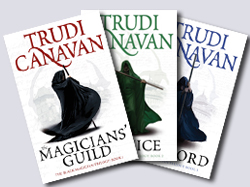
was so caught up in the Black Magician Trilogy Series by Trudi Canavan that I
had wished for the series to never end, something I never did before.
I felt
like everything was so real in the book. The Kingdom of Kyralia, the characters
like Rothen, Lorlen, Dannyl, Akkarin and Sonea. Sonea was the main protagonist
and the way the book was written made me feel like I was her, living her life,
feeling her experiences and emotions. From an outcast to a well known and
respected magician, falling in love with the High Lord and being exiled for
learning the forbidden Black Magic just to save the kingdom from an incoming
invasion which no one believed.
I cried whilst reading the ritual of her exile
as it was written in a way that I could see it happening before me. The pain in
her heart for disappointing her mentor and close friend and being forced away
from the country when war was just days away. I have never felt that connected
to a book or character before in my life!
When I finally closed the book after
reading the final chapter, I just had mixed emotions. I was sad because the
series ended, happy at the brilliance of the writing, pitiful for Sonea as her
lover died and hopeful as a new sequel to the series would be written and
released shortly. The book really gave me a new perspective on reading, as it
was the first series that I had really thoroughly enjoyed and was actually
addicted to it. ‘The High Lord’ was the most impactful of the series as it
really brought out feelings in me that I never felt before. After all, guys are
supposed to only shed blood and not tears."
Today’s lesson also had an activity on debate. It was about whether
reading printed text or reading from the screen was better. We were to defend
reading printed text and worked with our other members to gather points that
will help turn the tide to our favor. In the process of the debate, there were
both pros and cons to both mediums of reading.
Debate: Print vs Screen
For example, printed texts are cheaper yet they are inconvenient to
carry around. Reading from screens is more diverse but the reader is easily
distracted as they are constantly bombarded by various pop ups and
advertisements which disrupts their flow of thoughts.
The debate gave everyone a different perspective on each matter and
our teacher John O’Conner Gomez stepped in now and then to give his own input
into each matter as well as carry on the flow of ideas by adding his own.The debate got quite heated near the climax as both groups exhausted
every point they had to try to win others to their side.
Personally, we feel that screens are just means to disseminate
information while printed text is for deep and detailed reading during one’s
private time. Even though using screens to read is more entertaining,
instantaneous and diverse, they should only be turned to when there is no
better alternative because once you’re in the zone of reading, you’re in the
zone and nothing can disturb your one-on-one time with the book.
- Jeremy Loh and Chong Kia An (VS)
Reflection on Dinner at The Castle, and movie night
Fish n Chips dinner
The classroom turns into a private cinema
Today, I must say, is one of the most
memorable days among the past few days. Dinner served today was traditional
fish and chips, in Singapore, fish and chips served came in plates. However,
today's dinner came in paper packets. Mr Dan Strange then explained to us that
this was the traditional way of wrapping fish and chips. This had a strong
impact as I could now understand the different cultures and tradition between
Singapore and England. I must say that England obviously has a richer culture
and tradition than Singapore, judging from the unique way of their food
packaging.
After the sumptuous dinner of English Fish and Chips, came the movie "10 Things I Hate About You". It is a touching movie adapted from William Shakespeare's play "The Taming of the Shrew". As a romantic comedy, the director really brought out the meaning of love, the mutual love that is the important factor in the show, instead of puppy love. A character in the movie named Patrick Verona, was an outcast in school and he was deemed a hooligan. However, because of his love towards Kat, another high school student, he was willing to turn over a new leaf and quit smoking for the sake of the girl. After watching this movie, I was really touched at the movie plot. It was well written as it brought out the elements of true love. Overall, I can say that today was very memorable, with the knowledge of English tradition and the little enlightenment of true love.
Our very first day in the Reach Cambridge program began at
approximately 8.45 am as we arrived at the Chesterton Towers, otherwise known as
the Castle. The Castle is one of the oldest buildings in Cambridge and it even has
the oldest door! The Castle comprises of two levels. The first being the
classroom and the second, offices and toilets. Despite giving off a sense of
history to its visitors, the Castle is well equipped with modern chairs, tables
and a heater providing a very conducive environment for learning.
Our lecturer: John O' Conner Gomez PhD
We also met our
instructor for English, John Conner, who gave us a warm welcome and a brief
overview of the topics we are going to learn in this program. His method of
teaching is very enriching and interactive and his friendly manner makes us
feel comfortable enough to ask questions and learn more.
The lesson began with the
reading of an article about undergraduates in UK having problems with academic
writing. We learnt to identify the various characteristics that can be found in
essays and analyzed how that particular article was persuasive, precise and clear.
We further increased our understanding by comparing the differences in Lab
reports and History writing. For example, Lab reports are mainly informative, where
the facts and experimental results speak for themselves, whereas history
writing has an air of persuasiveness about it when presenting the facts.
Lesson in The Castle
After a short break, we return to discuss George Orwell’s
introduction on his essay of whether the English language is inherently
decadent or not. Using his introduction, we sharpened our skills in identifying
good characteristics a good introduction should have. Thereafter, we learnt a
few rules regarding academic writing: always using the active form instead of
the passive, and never use hyperbole. Also, John gave us two ‘Golden Rules’ we
have to follow which are: less is always better, and think carefully when
choosing words. As the three hours breezed by, we learnt important skills and
information that we can use for discursive writing and argumentative writing
back in school. We also learnt how the skills we are learning to develop in
school is of great importance helping in our progress up the academic ladder to
be more critical writers who are focused and concise. Lastly we ended of with
an activity to simplify and condense complicated sentences, into simpler ones
which definitely helped sharpen our skills in summary.
- Ahmad (VS)
Cambridge City Tour
25 min walk from The Castle to the City
The tour around the Cambridge city centre gave us more
information about some of the colleges around the area. We got to know more
about the tradition and the rules within colleges, such as formal dinners that
is set on certain frequencies that varies with each college. We got to know
more of the rich history behind each college when we went around seeing each
college. One example was Queen’s college, which was founded by two Queens
because the first queen lost the favor of the people and was unfortunately killed,
and then the following queen stepped in and re-established the Queen’s college.
Cambridge City Tour
This tour was really fun and informative throughout the
whole tour as our guide, Mr Daniel Strange, was really friendly and
interactive, letting us try to answer his questions although we don’t really
know the answer. He would even joke with us by stating random facts only to
mention that he had made them all up. That was his way of informing us how they
are many false facts, myths and urban legends that have been exaggerated and
spread around just to make the facts more interesting.
Cambridge City Tour
The colleges in Cambridge are scattered all over, with the
whole city being one giant network of both colleges, shops and houses, due to
the different eras in which the colleges are built. This system is in great
contrast to how the universities are in Singapore. Back home, our universities
are more contained with various faculty buildings within the same compound.
Students go from one faculty to another on shuttle buses whereas the main mode
of transport for the students in Cambridge is the bicycle.
It was also interesting
to see how the university caters to the cycling culture by providing space to
park bicycles and also ramps so cyclists can push their bikes up and down the
stairs.
Trinity College, Cambridge University
I feel that these scattered facilities bring out a unique
vibrancy in the city, as students studying in Cambridge will be able to explore
their surroundings and have more freedom to roam around the streets.
The locals feel
very proud of being able to study in Cambridge, which I think it is because
they feel a sense of belonging to the rich and prestigious history of their beautiful
university town.
-Dylan Tan (VS)
Punting
Punting with a view of the Newton Bridge (a.k.a The 'Mathematical' Bridge)
The punting was a great end to the tour. It was very relaxing to wind-down on the boat to digest the day’s new experiences. But of course, the punting itself was a new experience for most of us. To propel the boat forward the punter has to drive the stick all the way down into the mud and literally push the boat forward. We were amazed by the punters’ stamina to keep propelling us for about half an hour. The punters themselves were interesting as they ranged from male to female and college students to adults. They were friendly and kept us engaged with lots of fun facts, urban legends and even celebrity gossip on how members of the Royal family spent their days as students at Cambridge University.
They were also knowledgeable as they could explain to us the history of each college and famous landmarks we passed.
Beautiful architecture of the various colleges
The people on the other punts were very interesting as well. They ranged from residents and students having a relaxing time, to tourists who were equally fascinated by the beautiful architecture and laissez-faire atmosphere of the place. The passengers seemed to be thrilled as they snapped photos of the passing colleges and occasional ducks. There were many different kinds of passengers as well including students, like us, and elderly. Some even took over the punter for an enjoyable experience. It was interesting to note how the students, despite the pressures of being in an elite university, could afford the time to relax by the banks and have an enjoyable time with their friends.
Personally, I felt it was a perfect experience to settle down and reflect on what we have learnt today and what we are all excited about in the days to come. We also treasured the novel feel of punting, as it was truly a rare experience.
It is the first time that I'm visiting the UK. But the uniqueness of this country struck me as soon as we boarded the bus headed for our destination, Cambridge. On our way, we passed by many lush grass meadows surrounded by little wooden fences - a sight that is rarely seen in Singapore. Some of them had pretty flower bushes around too, making the area look even more enchanting.
As we drove further, we came across many old-European styled houses. Most of them were probably a few decades old, but they'd definitely not lost their charm. It is also rather amazing that this country is able to 'preserve' these houses so well, and some were also creatively fashioned into pretty little boutiques and restaurants. I have always loved the sight of old European houses in movies but seeing it in real life was definately an extremely charming and unique experience.
Lastly, the people in UK have also left a really good impression on me. We were greeted by warm smiles at the airport immigration, and the friendly lady officer definately did a great job welcoming us. Although it was a simple gesture, it's still a big 'plus point' for me.
It has only been our first day in the UK, but it has definately been enough to form some good impressions of the place.
- Li Yuan (CGS)
Singapore was a former colony of Britain therefore I was not surprised to see many similarities between Singapore and London. The transport system, and the tall buildings beside the airport all reminded me very much of Singapore.
One of the prominent differences however is of course, the weather. Today's weather was really 'teeth-chatteringly' cold and it really made me appreciate Singapore's 'summertime'. Usually in Singapore we don't shove out hands into pockets, but having experienced one of the colder days of summer here, I can now understand why actors in autumn or winter moviescapes always have their hands in their pockets!
The people here are also more open and seemingly more friendly. In that sense, Asians are different from Westerners, for we usually tend to be more reserved when regarding foreigners.
All in all, I feel that what we've seen and experienced today was just a small peek into England, so I'm looking forward to gaining more insights tomorrow!
- Jasmine (CGS)
Singapore is a tropical country, where the temperature is constantly above 25 degreees. However, many of us do not appreciate it as we feel that we do not have a chance to experience the four other seasons, especially winter. It is currently summer in Cambridge, but the temperature seems as if it is currently winter. Upon landing, most of us were only wearing T-shirts and jackets. As we waited outside our accomodation, our teeth clattered uncontrollably. We couldn't help but laugh at ourselves as it was a really funny sight.
I think we are incredibly blessed in Singapore and we should be thankful for its wonderful tropical climate instead of grumbling about not being able to enjoy winter.


 I cried whilst reading the ritual of her exile
as it was written in a way that I could see it happening before me. The pain in
her heart for disappointing her mentor and close friend and being forced away
from the country when war was just days away. I have never felt that connected
to a book or character before in my life!
I cried whilst reading the ritual of her exile
as it was written in a way that I could see it happening before me. The pain in
her heart for disappointing her mentor and close friend and being forced away
from the country when war was just days away. I have never felt that connected
to a book or character before in my life! 


 Singapore was a former colony of Britain therefore I was not surprised to see many similarities between Singapore and London. The transport system, and the tall buildings beside the airport all reminded me very much of Singapore.


.JPG)